Before taking a closer look at the “St. George XVIIIc,” we would like to share some insight into the research behind it.
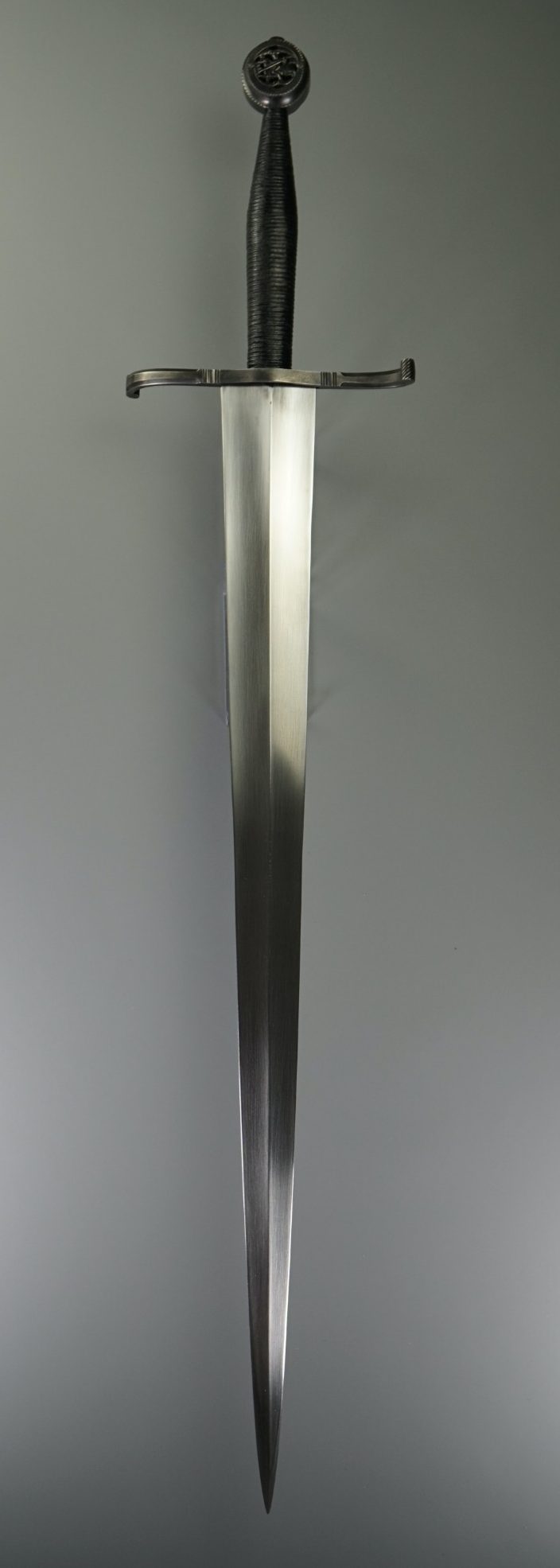
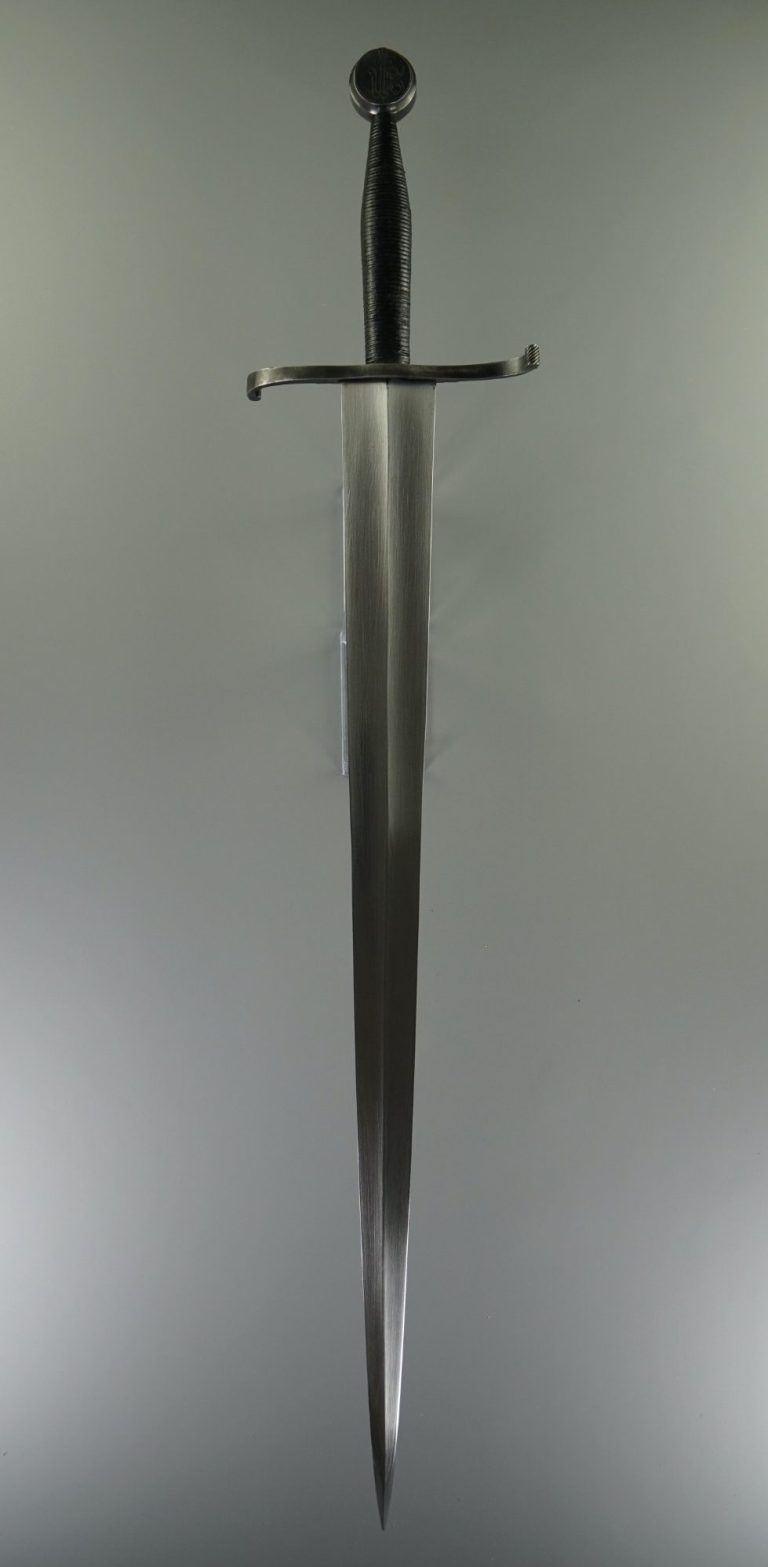
This sword is a research-based reconstruction inspired by an original sword preserved at the Metropolitan Museum of Art.
To better understand the structure and development of medieval edged weapons, we recommend the typologies and studies of
Ewart Oakeshott,
Alfred Geibig,
Mortimer Wheeler,
Jan Petersen, and
James Elmslie
as foundational literature. These scholars have significantly shaped the academic classification of European swords and provide an essential framework for anyone interested in the subject.
Our work builds upon these research traditions. In addition, we draw insights from direct study of the original artifact in the museum where the historical piece is preserved.
If you would like to explore the subject further, we highly recommend the works of the authors mentioned above as valuable additional reading.
The sword presented here follows Oakeshott’s Type XVIIIc and can be viewed at the Metropolitan Museum of Art in New York under object number 26.259.2a, b.
Our model is strongly inspired by a North Italian sword from the second half of the 15th century (1450–1475) – a period in which craftsmanship, military innovation and refined design reached an exceptional level. Based on the information published about the original and our own research, we developed our own design and dimensions.
The name of the sword derives both from the distinctive decoration of the pommel and from its typological classification according to Ewart Oakeshott. From this combination emerged the designation “The St. George” – Oakeshott Type XVIIIc – a name that unites tradition, scholarly typology, and aesthetic intention.
You can learn more about us and our ambitions on our “About” page.
The St. George
Oakeshott Type XVIIIc
Inspired by the North Italian sword from the second half of the 15th century (1450–1475) in the MET
Transparncy matters to us!
The production of our swords is carried out in collaboration with carefully selected international partners. Our own responsibilities encompass historical research, the preparation of technical drawings, the development and refinement of each design, as well as the final assembly of all individual components.
We place particular emphasis on the craftsmanship of the decorative elements, which are entirely executed by hand. We deliberately refrain from using modern manufacturing techniques for this work, as traditional craftsmanship better reflects our aesthetic standards and our appreciation of historical artistry.
The final inspection and comprehensive quality control of every individual sword are also carried out entirely by us.
We believe in being open about how our swords are made. In the short sections below, we walk you through our process. Our reconstruction consists of six components: the blade (including the tang), the crossguard, the grip, the pommel, the decorative plate, and a small intermediate element (“knob”) positioned between the pommel and the peened end of the tang.
The Blade
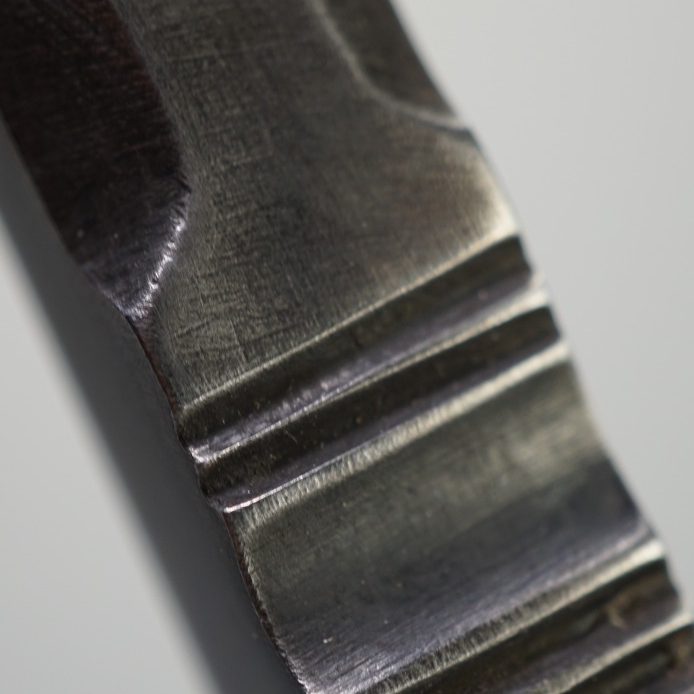
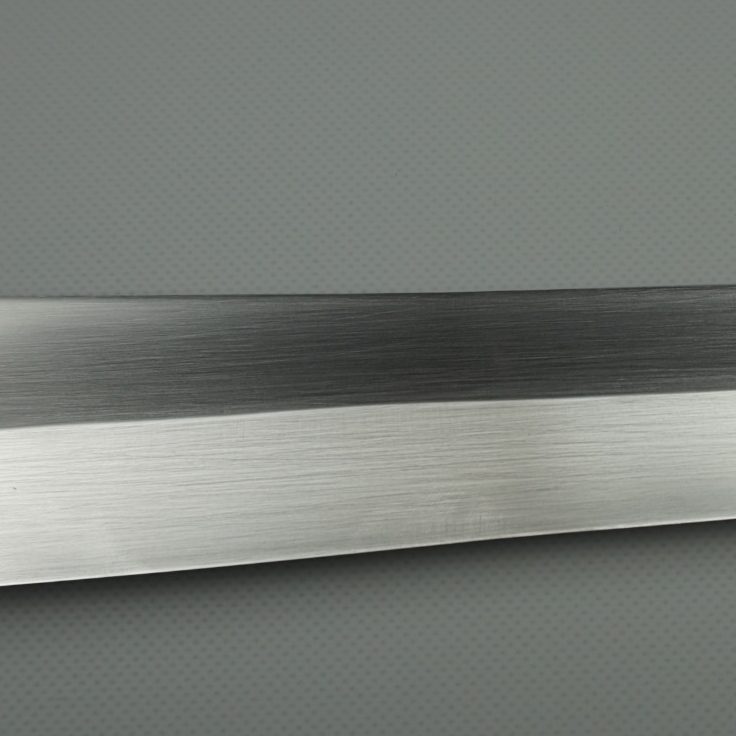
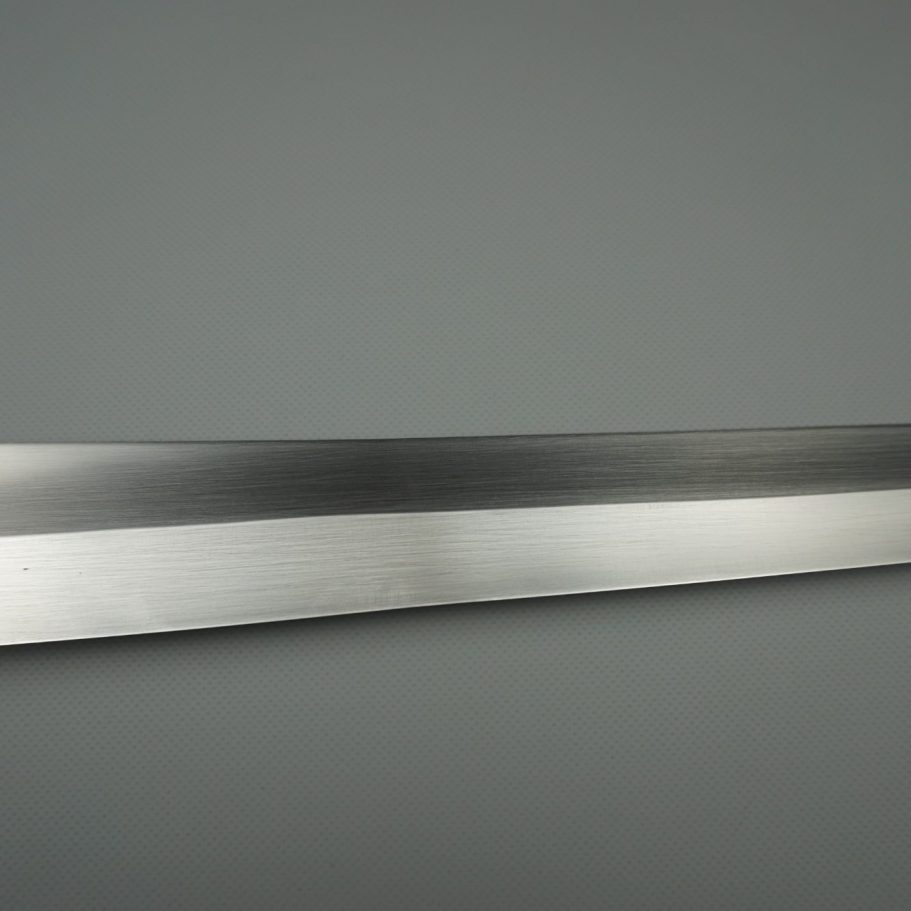
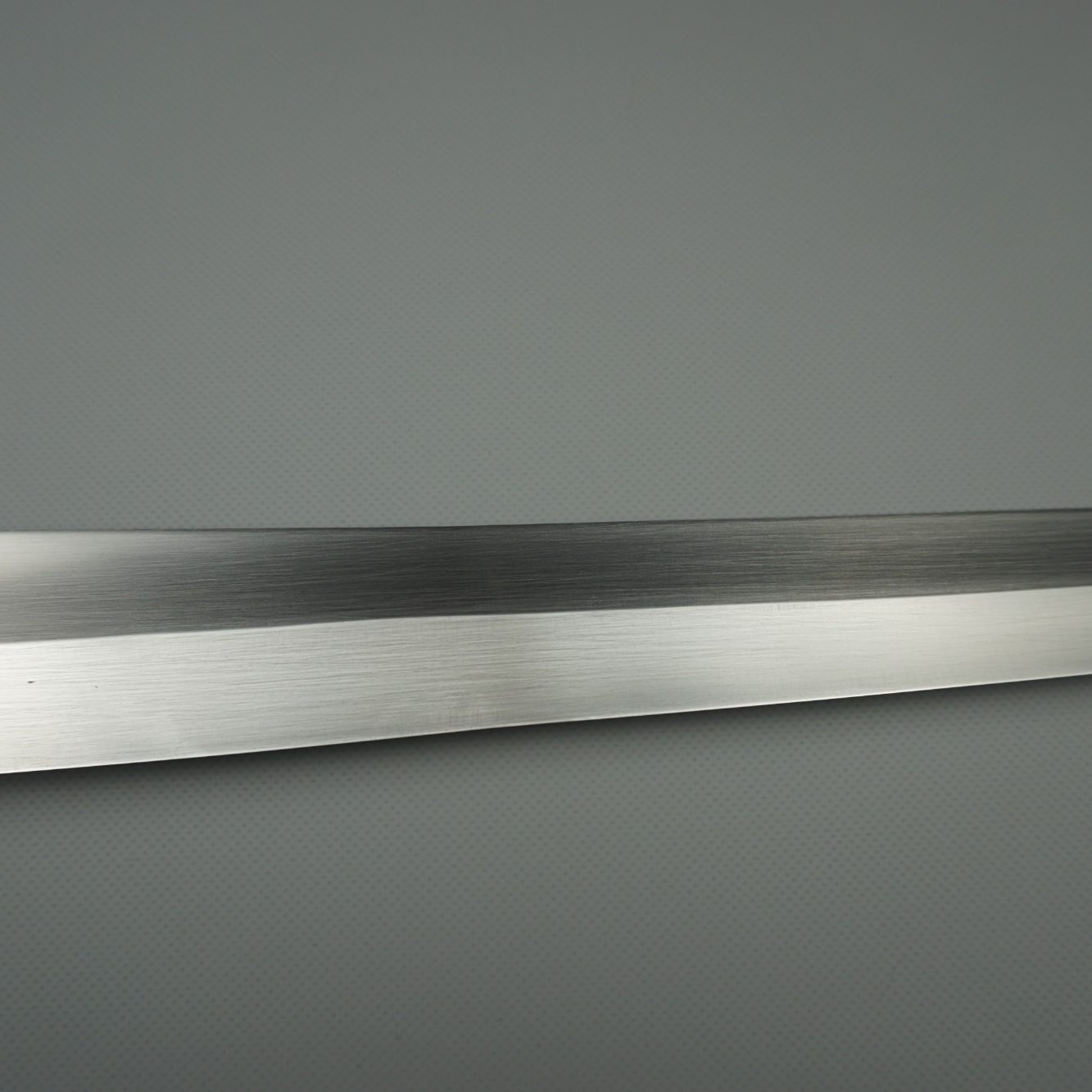
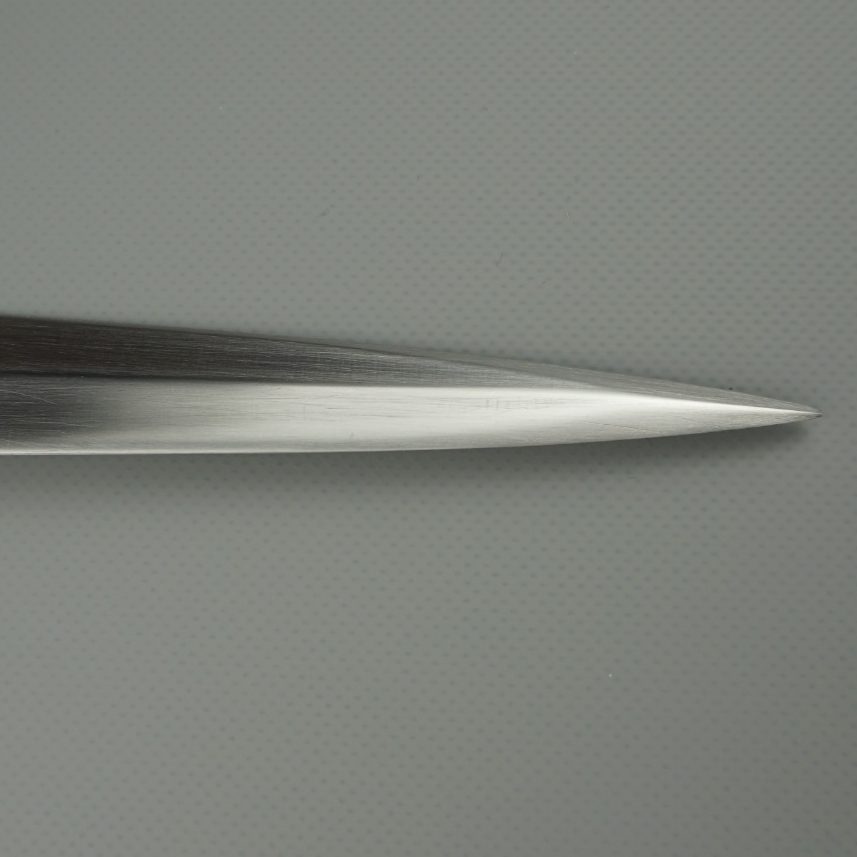
The process begins with the blade, made of steel. It is forged to shape, then ground according to historical models and, after fine grinding, carefully hand-polished to achieve an authentic surface appearance. Originals preserved in museum collections clearly demonstrate how varied finishes could be – ranging from finely smoothed to visibly handcrafted and textured. The surface structure also depends on the cleaning process and the overall handling of the sword. However, with original pieces, one can generally assume that the surface appearance was once different when new and has evolved over time through use and ageing. We take our orientation from particularly well-preserved examples and aim for a surface that is historically plausible and at the same time vibrant, without appearing sterile. Accordingly, you will not see any coarse marks from an angle grinder on our blades. Our blades can be supplied either sharp or blunt, entirely according to your preference.
Guard & Pommel
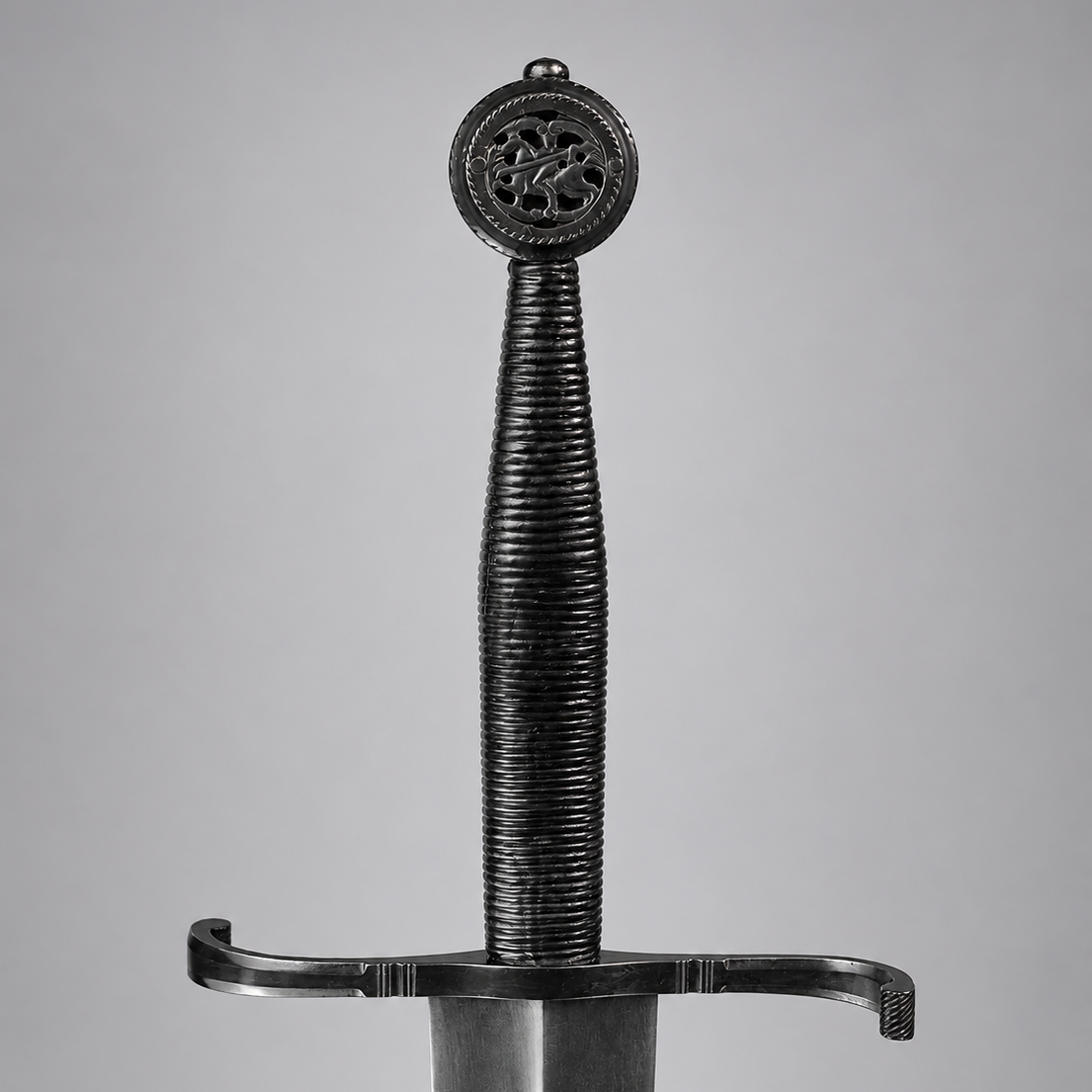
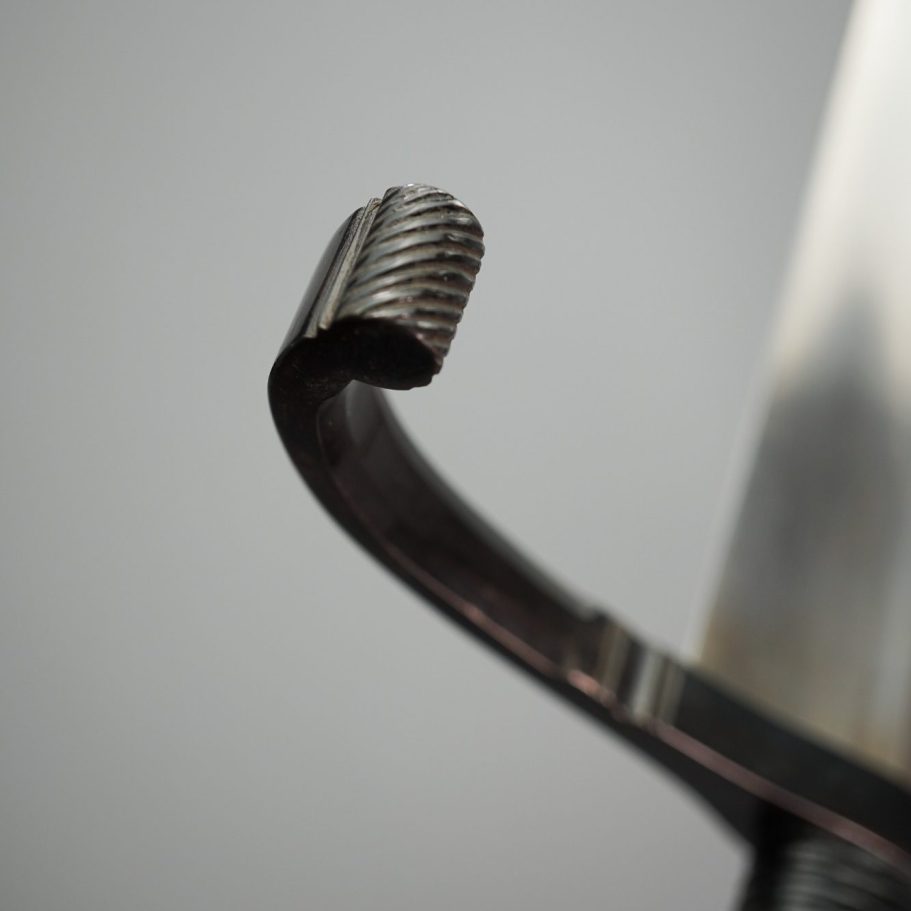
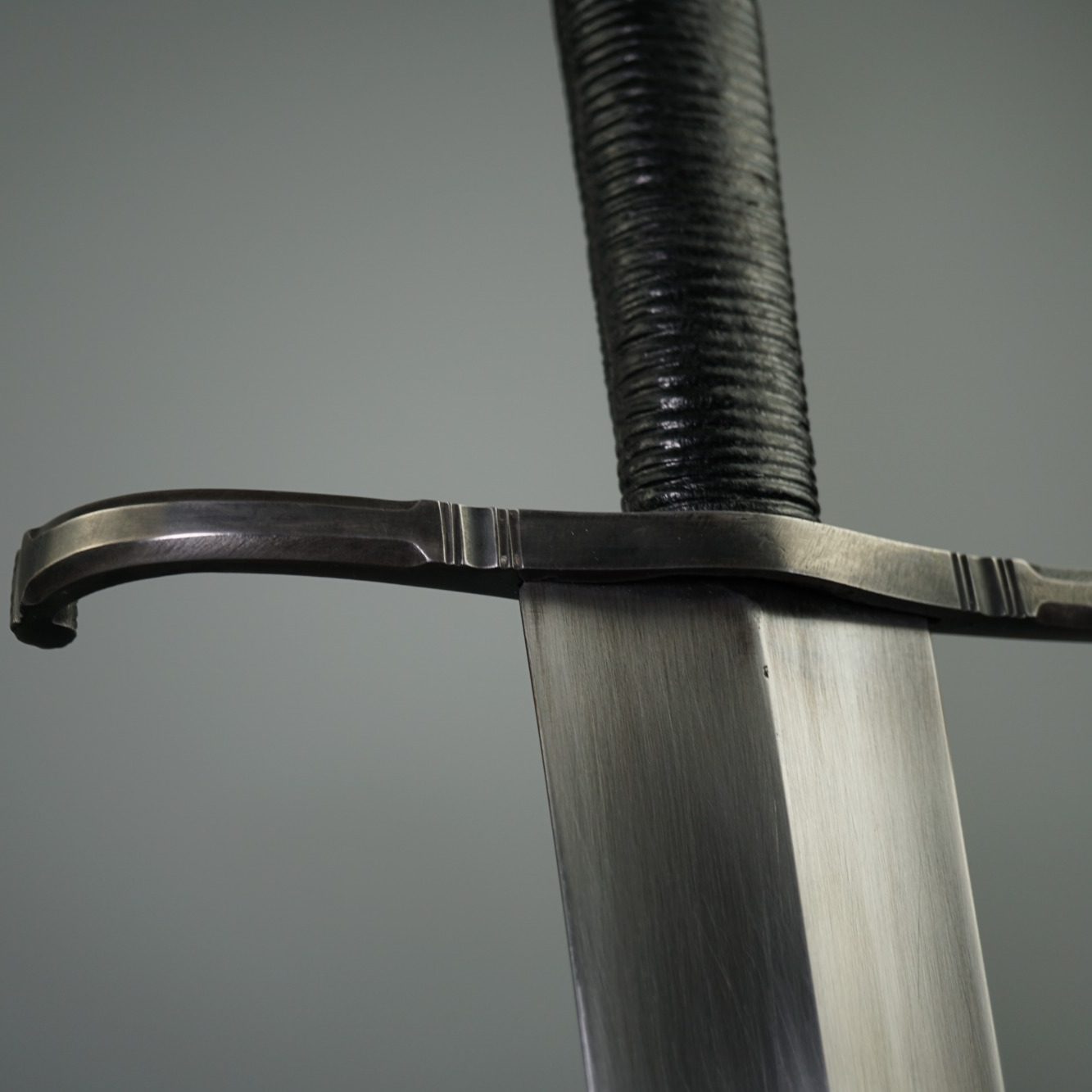
After the blade, the crossguard and pommel are made. Our guards and pommels are designed on the basis of our own research. While we insist on hand-forged blades, we take a different approach for the guard and pommel: here, modern manufacturing offers clear technical advantages and precision. Than the fit is exact we begin the subsequent grinding and finishing processes, refining proportions, weight, and form until the overall result is harmonious.
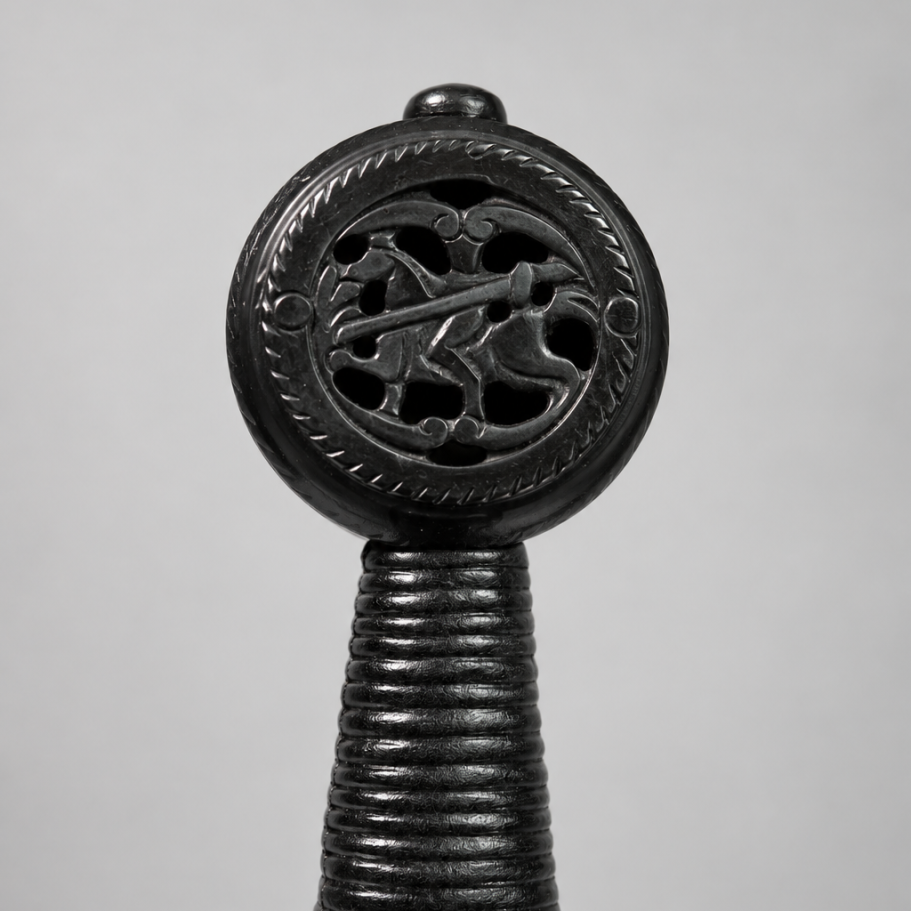
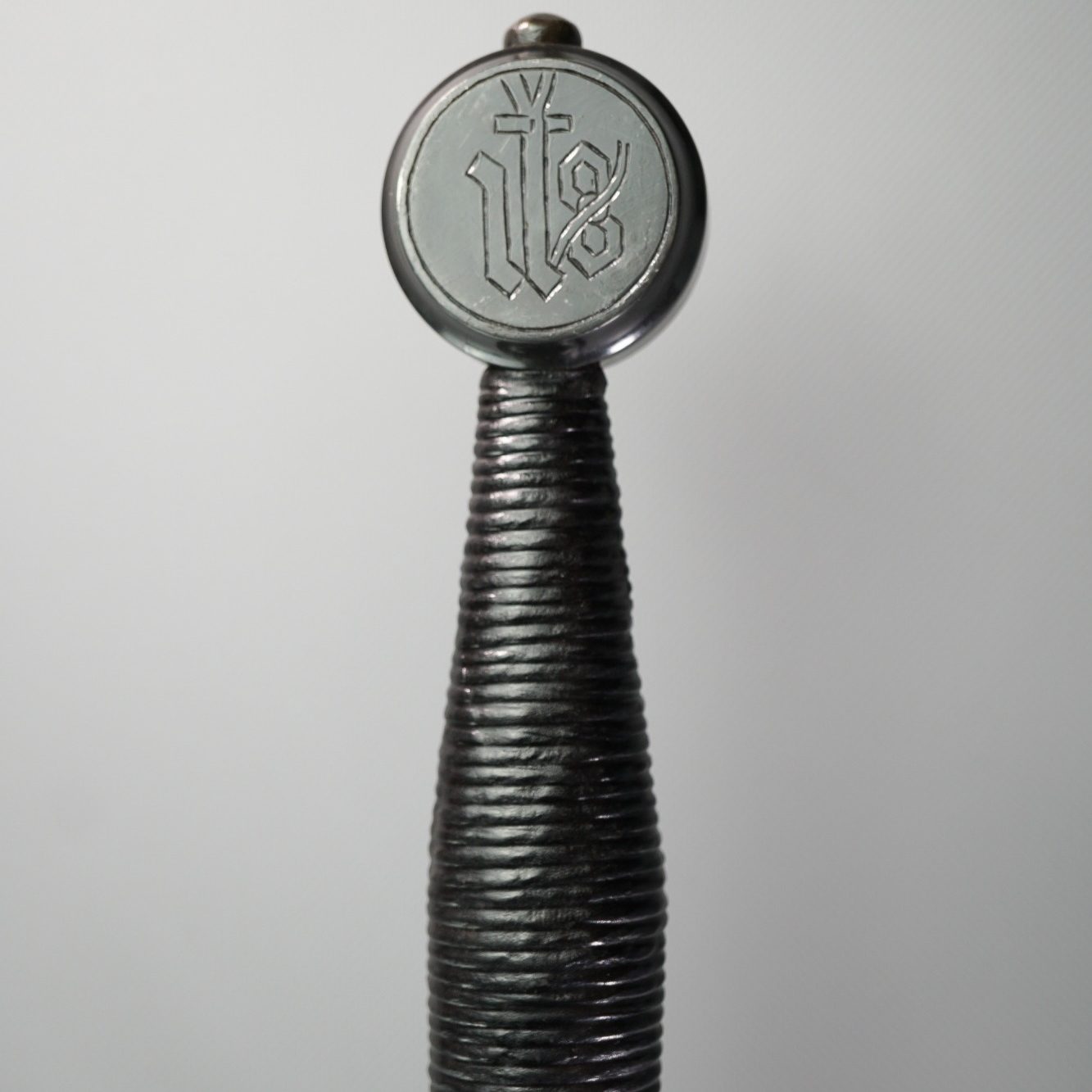
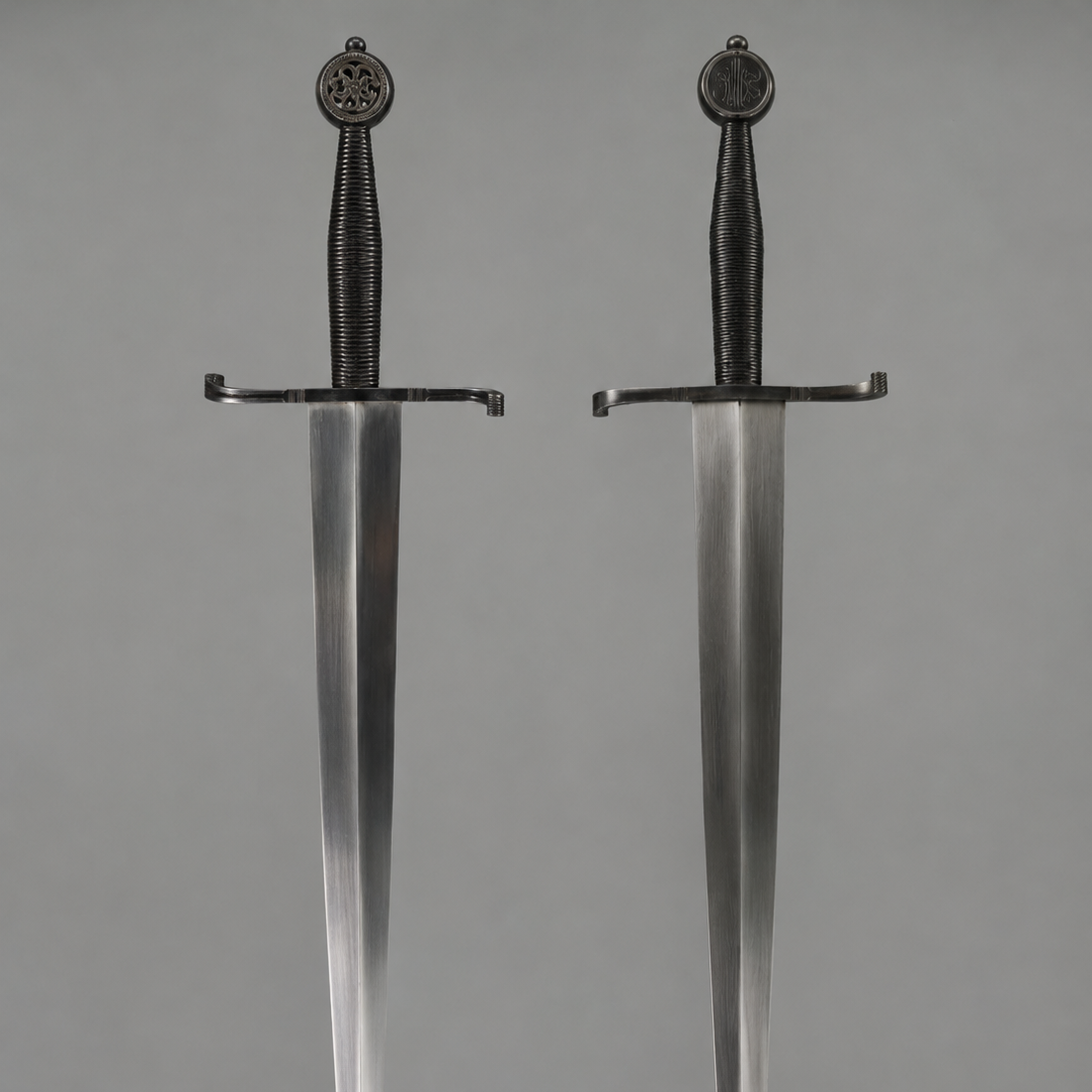
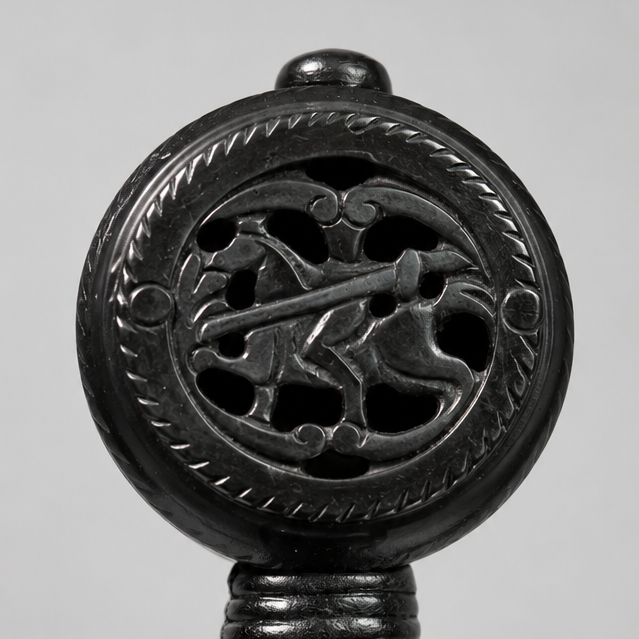
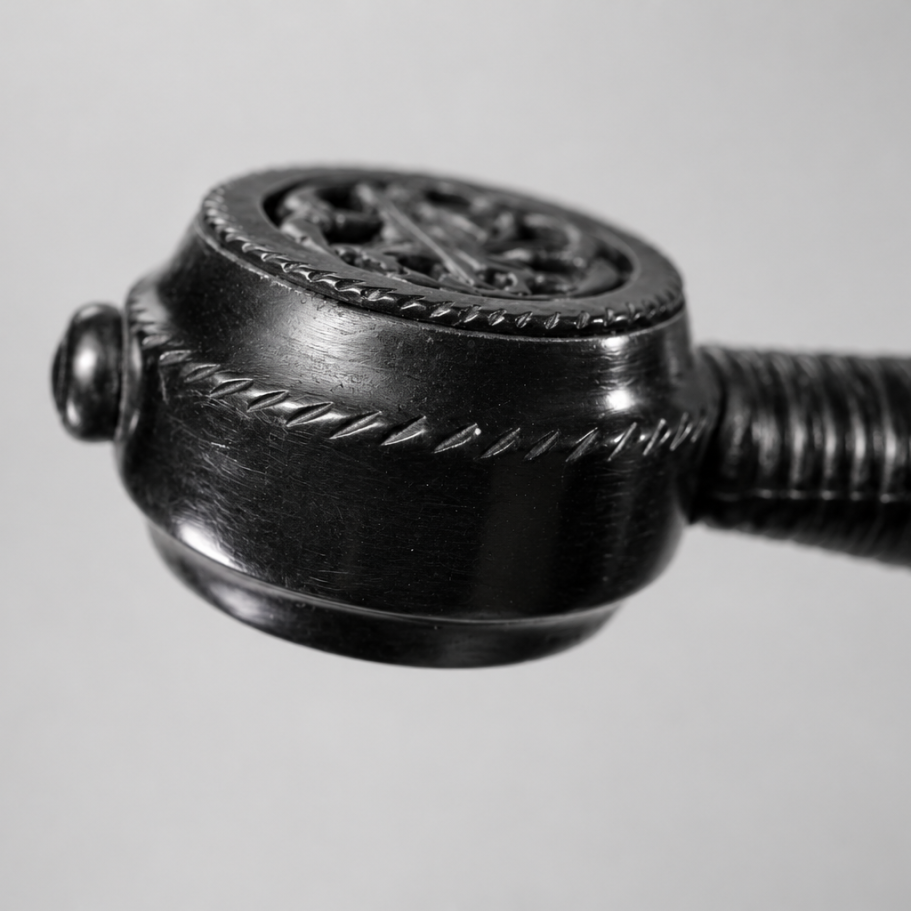
The decorative plate of the pommel is produced separately and then riveted to the pommel above the plate – this construction is clearly visible in the illustrations. To maintain a balanced weight distribution, a cavity is forged into the pommel. This cavity is concealed by the decorative plate, creating a closed structural unit. The plate features an incised depiction of Saint George.
St. George & the Christogram
George was an early Christian martyr who likely lived in the 3rd or early 4th century. According to tradition, he served as a Roman soldier and openly professed his Christian faith at a time when Christians were persecuted under Emperor Diocletian. Around AD 303, he suffered martyrdom. He is particularly renowned for the legend of the dragon slayer: George is said to have freed a city from a dragon by defeating it with his lance – a symbol of the triumph of faith over evil. He is regarded as the patron saint of numerous countries and cities, including England, and his feast day is celebrated on April 23.
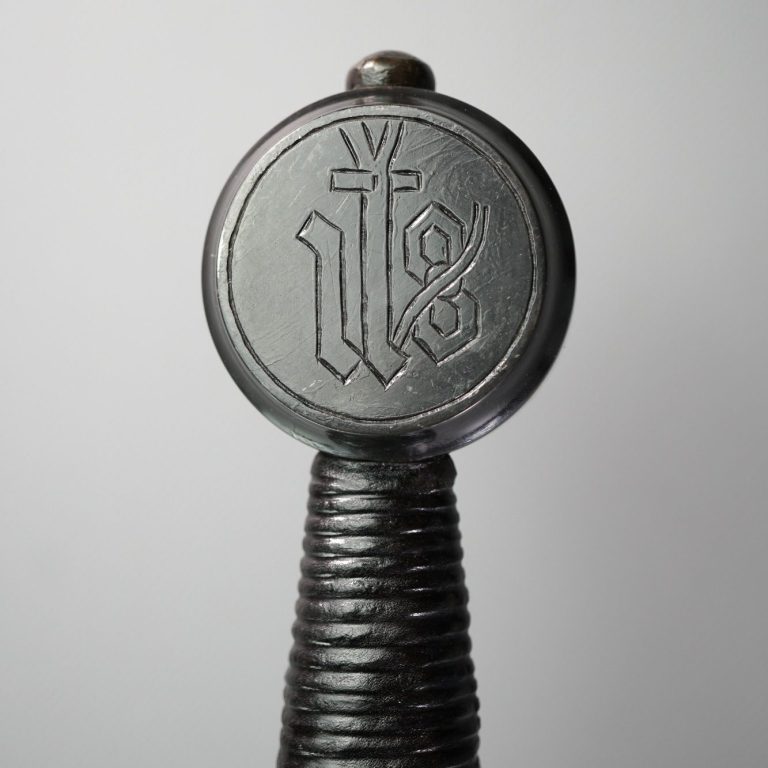
On the opposite side of the pommel there is a fine iron engraving, presumably representing an artistically stylized Christogram, which lends the object symbolic depth. A Christogram is a monogram formed from letters that abbreviates the name of Jesus Christ. Among the best-known forms is the so-called Chi-Rho symbol, composed of the Greek initials Χ (Chi) and Ρ (Rho) of “Christos,” which gained prominence in the 4th century through Constantine the Great. Other variants include “IHS” or “IX,” which likewise derive from the Greek name of Jesus. On swords, such a sign carried multiple meanings: it functioned as a protective symbol, placing the bearer under divine protection, while simultaneously expressing the Christian faith of the owner. As weapons in the Middle Ages were at times blessed by the Church, a Christogram could also emphasize the sacred dimension of the sword. At the same time, it served as a visible profession of faith and a symbol of authority in a period when religious identity was closely intertwined with rulership and warfare. As a finishing step, the pommel and crossguard are blackened.
The Grip
The grip is made of hardwood. The tang is burned into the wood to ensure a precise fit. The grip is then shaped and covered with moistened leather. Once dried, the final assembly and peening are carried out. It is crucial that, even before the final peening, all components sit firmly and without tension – no part must exhibit any play.
An Open Question
In the course of our research, we noticed a particular detail on the original in the Metropolitan Museum of Art: when examining the two sides of the sword, the pommel with its decorative depiction (Saint George) and the decorated side of the crossguard are mounted on opposite sides. This appears unusual, as decorative elements are typically aligned consistently toward the presentation side, especially in representative pieces.
What might explain this? Was the grip replaced at a later date and the sword disassembled in the process, leading to the crossguard or pommel being inadvertently reassembled in a rotated position? Or was the less ornate side featuring the Christogram intentionally meant to be presented together with the decorated side of the guard?
To clarify this question, we contacted the museum directly and drew attention to this observation. We have not yet received a response and are eagerly awaiting the institution’s assessment and interpretation.
Your Piece (No. __/500)
Each sword is individually crafted, and slight variations may naturally occur. These subtle differences make every single piece unique and truly special. If you were to place several examples of The St. George side by side, each would likely reveal its own small, distinctive details.
Fun fact: On the underside of the crossguard, you will find a small stamped number indicating which sword in the series you own.