Understanding Arms and Armour A Guide for Beginners and Enthusiasts
How does one begin engaging with Arms and Armour?
Considering the research opportunities available today, those interested have numerous options at their disposal. Traditional approaches to the subject of Arms and Armour include books, articles in academic journals, or simply visiting a museum and making use of the information provided there. On the other hand, modern research methods such as the Internet or AI – Artificial Intelligence – may also be employed.
When conducting research on the Internet through forums, Wikipedia, and other websites, caution is advised. Owing to the relatively limited field of interest represented by Arms and Armour – especially when compared to subjects such as paintings, architecture, and similar topics – one often reaches a point at which research stagnates. Although reliable and high-quality sources and literature can indeed be found online, researchers should carefully verify them to ensure that they originate from knowledgeable authors. Unfortunately, the Internet contains many dangers in the form of incorrect datings, false information, and numerous inaccurate representations provided by users who offer information about Arms and Armour without possessing genuine expertise.
This should by no means imply that only poor-quality material can be found online. Rather, the Internet provides an excellent opportunity for initial orientation and an entry point into the desired subject. In various forums one frequently encounters highly knowledgeable and well-read individuals who are deeply engaged with Arms and Armour. Furthermore, online libraries are often available – some free of charge, others requiring payment – where academic literature, articles, catalogues, and similar resources may be found. Added to this is the wonderful possibility of exploring the digital collections of museums from all over the world.
When considering AI – Artificial Intelligence – it quickly becomes apparent that this technology has not yet developed far enough to constitute a fully adequate alternative to research. For initial orientation and clearly formulated questions, one may occasionally receive answers that at first appear extensive and plausible, yet upon closer examination often remain superficial and contain informational gaps.
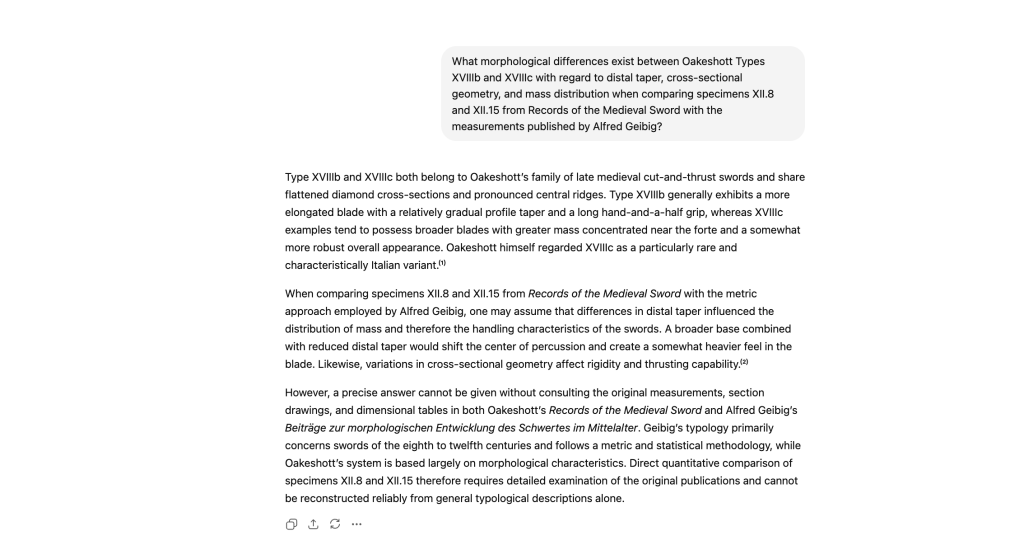
Consequently, AI should rather be regarded as a supportive tool – for example, for identifying valuable specialist literature, articles, museum libraries, and reliable sources of every kind.
I would like to emphasize that I do not intend to portray the World Wide Web negatively. Nevertheless, it should always be approached critically. At the same time, it offers outstanding opportunities for one’s own research, as it simplifies many tasks and can considerably accelerate the search for desired
information.
Not only the Internet and the accompanying developments in AI should be approached critically, but specialist literature on Arms and Armour as well.
In my humble opinion, I would argue that the best way to engage with Arms and Armour is through a combination of specialist literature (ideally in several languages) and visits to museums that present historical artefacts in their impressive exhibitions. Since I come from Germany, I can recommend the Armoury in Dresden, the Blade Museum in Solingen, Hohenzollern Castle, the Germanisches Nationalmuseum in Nuremberg, the Army Museum in Ingolstadt, the Bavarian National Museum, and the Veste Coburg. Naturally, there are many more places worthy of a visit beyond those mentioned. The Wallace Collection is certainly one of the most prominent examples.
When selecting literature, attention should ideally be paid to whether the authors have a direct
connection to Arms and Armour in their professional background or generally enjoy a good reputation within this field. This does not imply that enthusiasts necessarily produce poor texts or questionable information. However, individuals with profound expertise and many years of engagement with the subject are usually better equipped to create works distinguished by depth and complexity.
In addition to books, journal articles—such as those published by the Society for Historical Arms and Armour Research or the catalogues of the Park Lane Arms Fair—provide an excellent source of
information. Furthermore, the footnotes and bibliographies contained therein allow for further
independent research.
When selecting literature, it is often helpful to consider the publication date in order to take newer approaches to research into account and to ensure that mistaken assumptions made by earlier authors may already have been corrected.
Once a sufficient foundation of literature has been established and a certain degree of basic knowledge has been acquired, it is advisable to expand one's understanding through museum visits. Observing the often artistically arranged display cases can visually confirm newly acquired knowledge or give rise to new questions. Although exhibition catalogues and scholarly publications provide images of excellent quality, the experience of standing personally before a sword, rapier, dagger, or mace is irreplaceable.
Edged Weapons as the Main Area of Interest
As our name, “Die Schwertfeger,” already suggests, our primary interest lies in edged weapons that can be assigned to the European context from approximately the 10th century to the early 18th century.
Since the development of edged weapons generally followed a gradual and fluid course, it is difficult to single out a personal favourite among the remarkable variety of swords, rapiers, long knives, sabres, and other weapons spanning nearly eight hundred years.
If I nevertheless had to commit myself to a particular period, it would probably be the years between 1500 and the early seventeenth century. Were I to explain the reasons in detail, this would likely exceed the scope of the present text; therefore, I shall leave my preference at this brief statement.
Since the sword and the sabre possess a particular fascination for many people—including myself—and often inspire the desire to own such pieces, it is worthwhile to explore their development, origins, and history. In order to
understand the development of a given period more fully, it is often beneficial to examine the preceding eras and the associated changes. For this reason, I shall also recommend literature concerning earlier swords.
It is customary for human beings to classify and systematise subjects of importance in order to create structures that facilitate the acquisition and transmission of knowledge. From this endeavour arose the aspiration to establish typologies within the field of historical swords, an undertaking pursued by various experts on edged weapons.
Perhaps the most prominent example is the author Ewart Oakeshott.¹ Many regard his works The Sword in the Age of Chivalry and Records of the Medieval Sword as standard references for the study of European swords dating from approximately 900 to 1550.
Among the authors who provide an excellent foundation for research into swords and sabres are Elis Behmer, Jan Petersen, Sir Robert Eric Mortimer Wheeler, Ewart Oakeshott, Alfred Geibig, A. V. B. Norman, James Elmslie, Wojciech Mikołaj Zabłocki, Czesław
Jarnuszkiewicz, Andrzej Nadolski, and Włodzimierz Janusz Kwaśniewicz. Naturally, many other scholars have devoted themselves extensively to this subject.
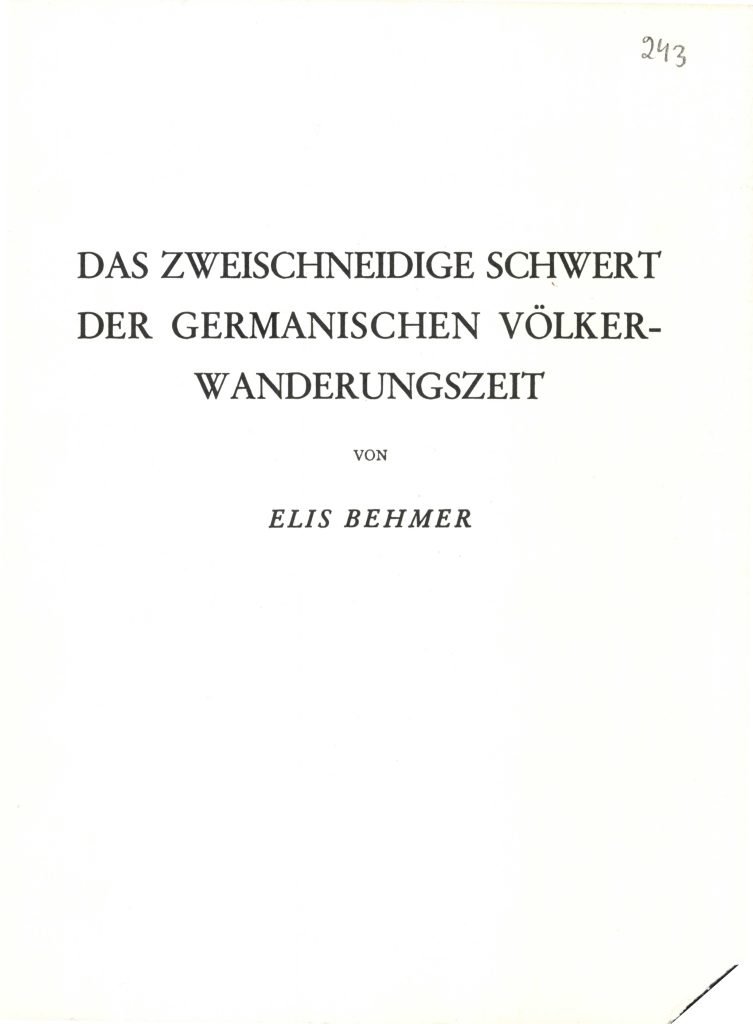
Elis Behmer developed a typology of Migration Period swords dating from the fourth to the seventh century AD.²
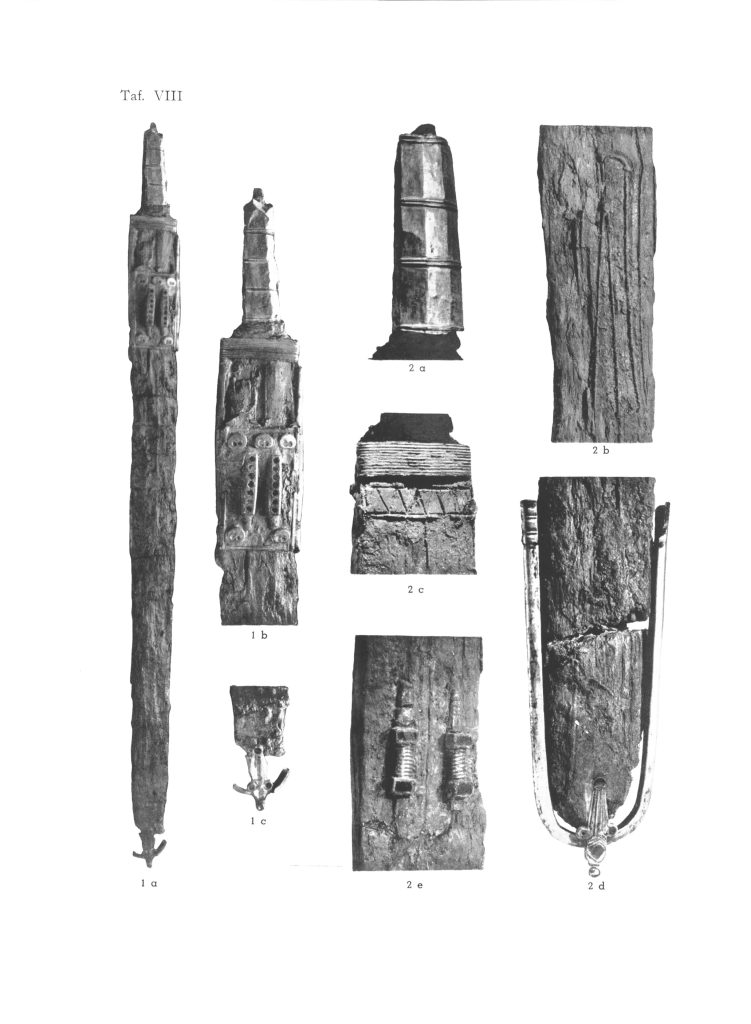
Jan Petersen³ and Sir Robert Eric Mortimer Wheeler⁴ devoted themselves to the study and typological
classification of “Viking swords” dating from the early eighth to the eleventh century.
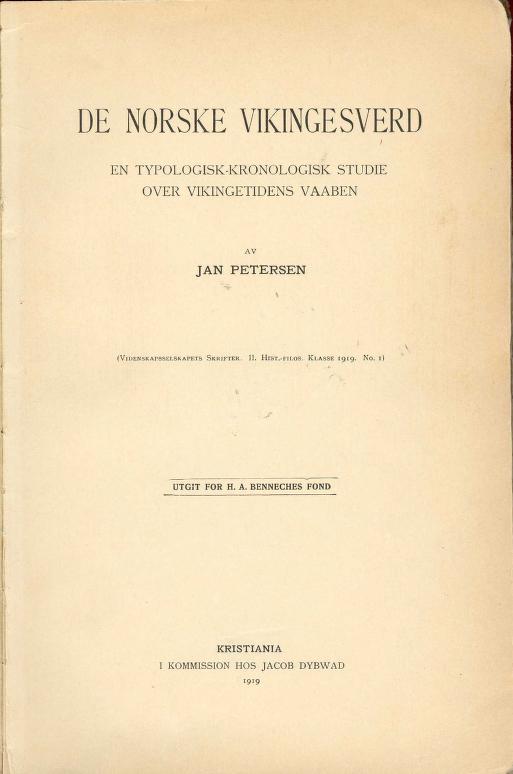
(Oslo), 1919.
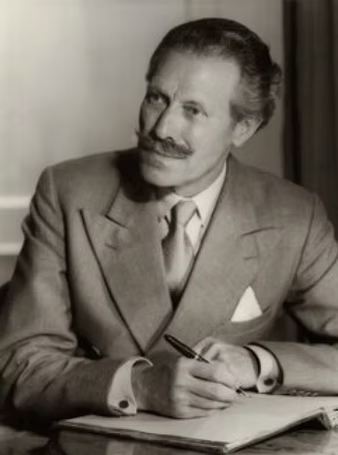
https://www.monumentsmenandwomenfnd.org/monuments-men-and-women/robert-wheeler?srsltid=AfmBOoph_O5QcwTJG1CCjyyh7LMsQUd81GyPM9bP9cifXaDY29p6cbX8
Alfred Geibig’s typology deals with swords from the eighth to the twelfth century and is based not primarily on visual characteristics, but rather on statistical analyses and metric data derived from archaeological finds in the German-speaking regions.⁵
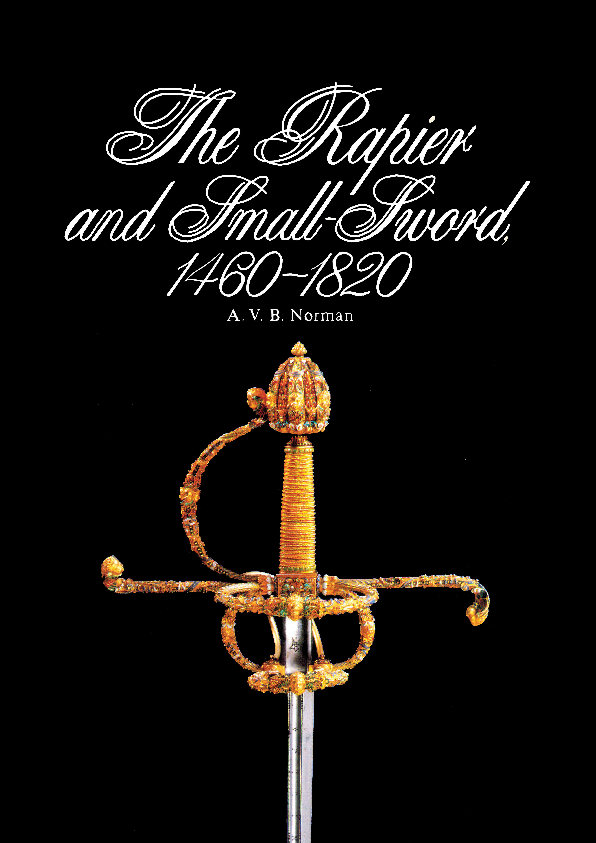
A. V. B. Norman focuses on the classification of European civilian weapons of the Renaissance and Baroque periods between 1460 and 1820, and his work remains a standard reference to this day. In contrast to Oakeshott’s typology, which concentrates mainly on blade forms and secondarily on pommels and crossguards, Norman focuses almost exclusively on the development of hilts, grips, baskets, and pommels.⁶
James Elmslie developed a typology for single-edged European blades dating from approximately 1100 to 1550, with particular emphasis on falchions and knives, which are examined and systematically structured in detail.⁷
When examining the typology of the sabre—particularly within Europe—it is worthwhile to consult the works of Wojciech Mikołaj Zabłocki⁸, who addressed the Polish war sabre of the sixteenth to eighteenth centuries not only with regard to decoration, but also in terms of dynamics and biomechanics.
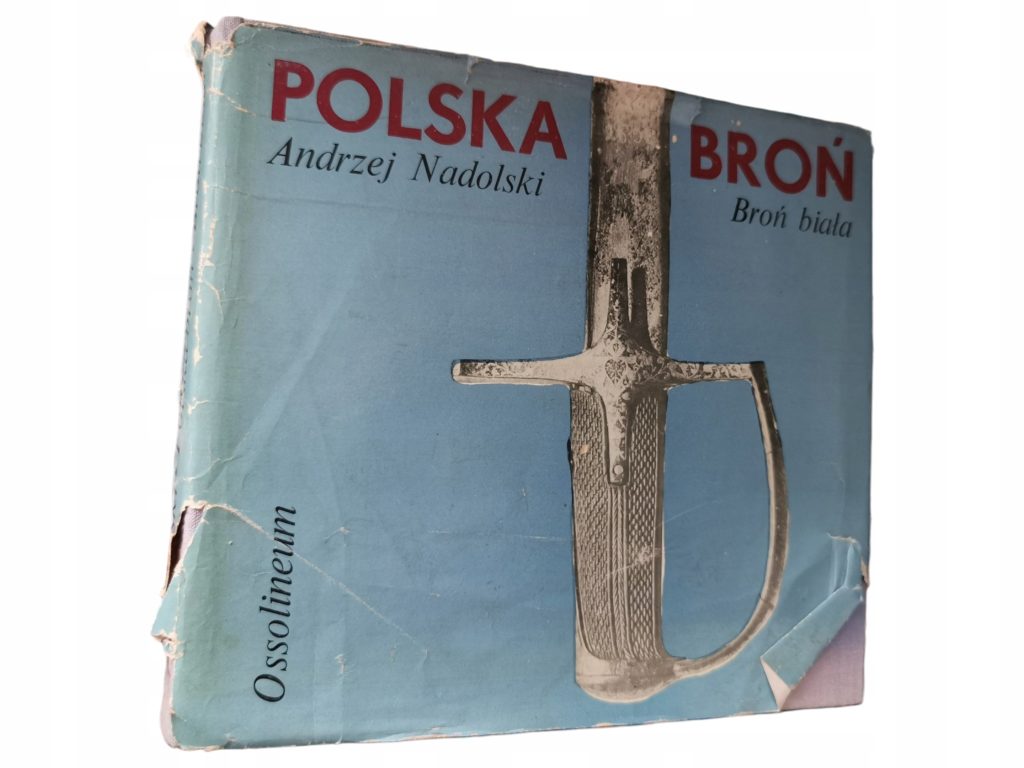
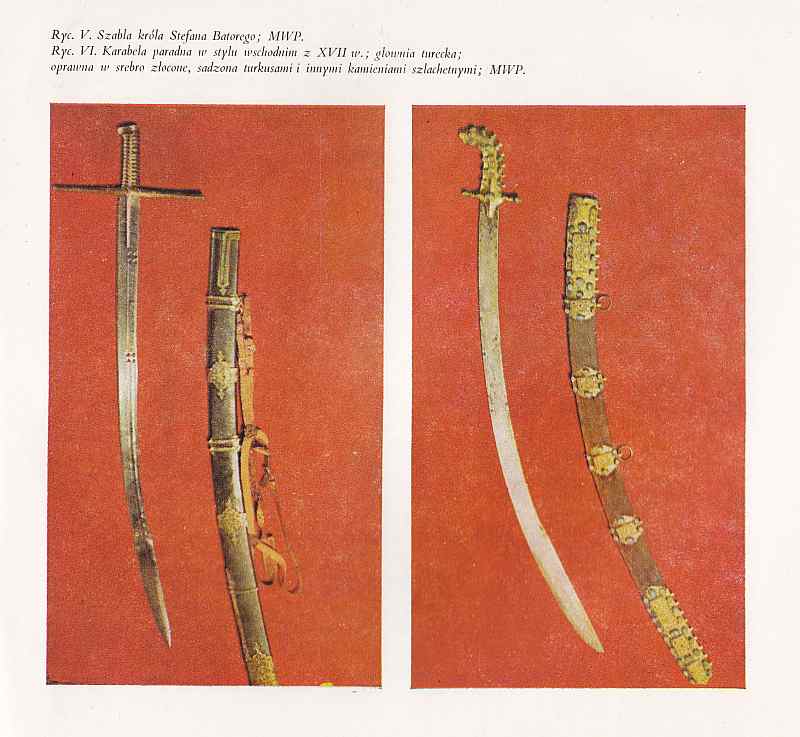
Andrzej Nadolski examined the entirety of Polish military history from the tenth to the twentieth century. His work "Polska broń. Broń biała" is regarded as a standard reference.⁹
In order to provide an even more comprehensive overview of relevant authors and literature, the Schwertfeger team is currently compiling a bibliography, which will be made freely available on our website. This will likely be a long-term project. Once the list has been completed and only requires occasional updates and additions, we shall, of course, inform you accordingly.
─────────────────────────
1 Ewart Oakeshott (1916–2002) gilt als einer der bedeutendsten Schwertforscher des 20.
Jahrhunderts und entwickelte die bis heute weit verbreitete „Oakeshott-Typologie“, mit welcher europäische Schwerter des Zeitraums von ca. 900 bis 1550 systematisch eingeordnet werden können. Besonders hervorzuheben ist sein multidisziplinärer Ansatz, der archäologische, historische sowie kunsthistorische Methoden miteinander verband. Seine Werke wie The Archaeology of Weapons oder Records of the Medieval Sword gelten bis heute als Standardliteratur im Bereich der europäischen Blankwaffenforschung. Messner, Florian: Ewart Oakeshott und seine Schwerttypologie, Innsbruck 2022, URL: https://www.researchgate.net/publication/362761254_Ewart_Oakeshott_und_seine_Schwerttypologie.
2. Behmer,Elis: Das zweischneidige Schwert der germanischen Völkerwanderungszeit, Diss. Stockholms högskola, Stockholm 1939.
3.Petersen, Jan: De Norske Vikingesverd: En Typologisk-Kronologisk Studie over Vikingetidens Vaaben, Kristiania
(Oslo), 1919.
4. Wheeler, Sir Robert Eric Mortimer Wheeler: The Roman Art of War, London, 1925.
5. Geibig, Alfred: Contributions to the Morphological Development of the Sword in the Middle Ages: An Analysis of Finds from the Late Eighth to the Twelfth Century from Collections in the Federal Republic of Germany, Neumünster, 1991.
6. Norman, Arthur Victor Bowden: The Rapier and Small-Sword, 1460–1820. London 1980.
7. Elmslie, James: Single-Edged Blade Typology, In: Wetzler, Sixt (Hrsg.), Das Schwert – Gestalt und Gedanke. Ausstellungskatalog des Deutschen Klingenmuseums Solingen, Solingen 2015.
8. Zabłocki, Wojciech: Cięcia prawdziwą szablą, Warschau 1989.
9. Nadolski, Andrzej: Polska broń. Broń biała, Wrocław 1984.
10. Kwaśniewicz, Włodzimierz: 1000 słów o dawnej broni i uzbrojeniu ochronnym, Warschau 1981.