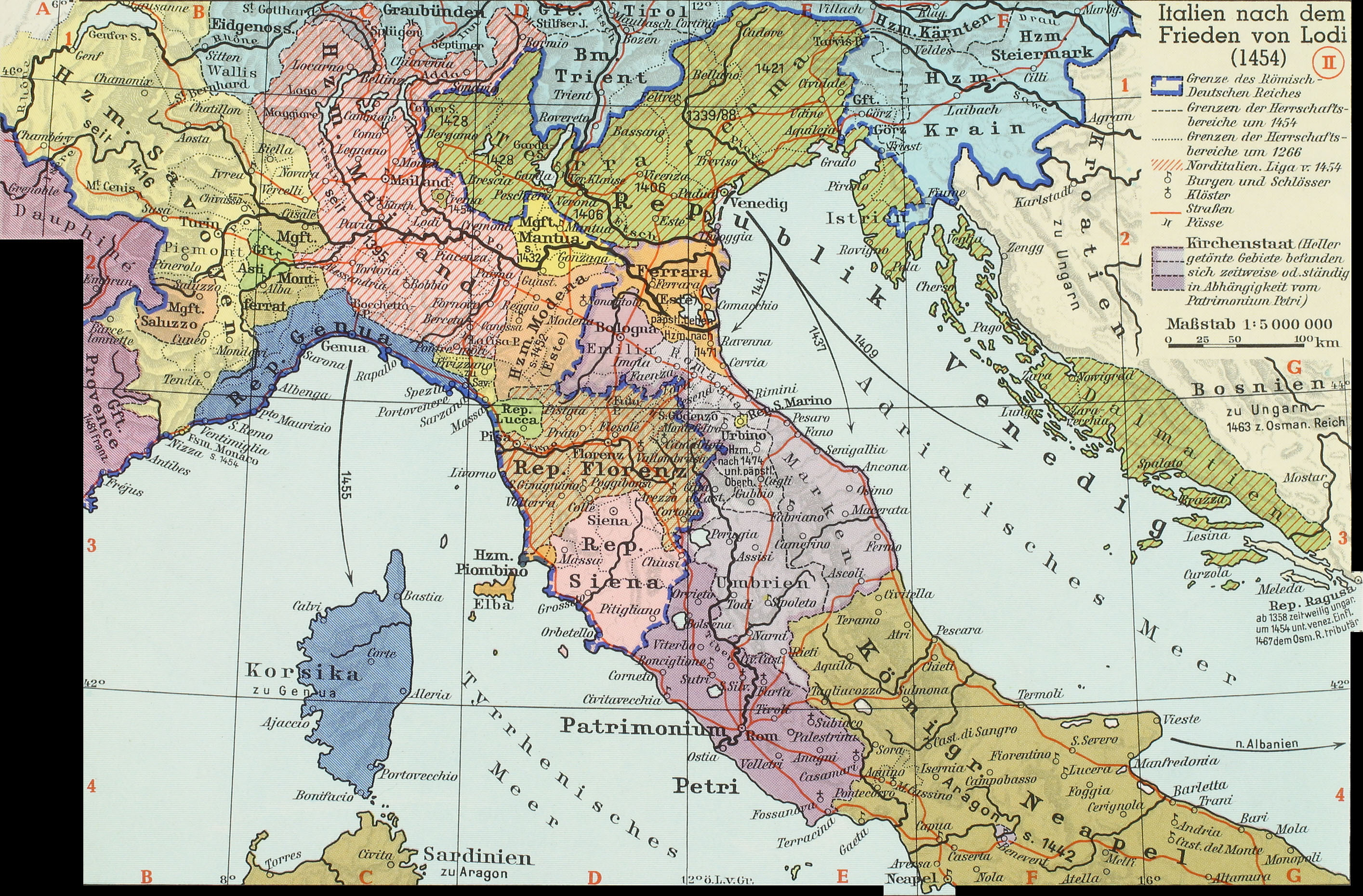
Northern Italian Bladed Weapon Craftsmanship of the 15th Century – The Metropolitan Sword in the Context of the Oakeshott Typology
The North Italian sword in the collection of the Metropolitan Museum of Art, dated between 1450 and 1475, is undoubtedly one of the most impressive surviving European swords of the late Middle Ages. Early exhibition catalogues already described the piece as an exceptionally magnificent example of Italian arms craftsmanship and especially emphasized its remarkably well-preserved condition. The broad double-edged blade tapers evenly toward a pronounced point and features a flattened diamond-shaped cross-section characteristic of late medieval thrusting swords. Despite this clear emphasis on thrusting capability, the sword retains a harmonious width and therefore appears less aggressively tapered than many comparable weapons of the same period.¹ This balanced design gives the object its calm yet highly representative appearance.
Compared to other fifteenth-century swords, the controlled overall aesthetic is especially striking. Whereas many late medieval blade forms display an aggressive technical specialization, this example combines functionality with an almost elegant restraint. This becomes particularly evident in the interaction of the individual hilt components. The flat disc-shaped pommel features finely crafted concave bevels and displays on its obverse a relief depiction of Saint George fighting the dragon. On the reverse appear the Gothic letters “IHS,” a Christological monogram frequently associated in the fifteenth century with piety and protective symbolism. The crossguard is likewise executed with exceptional quality. Its flat, ribbon-like arms twist distinctly toward their ends and reinforce the sword’s elegant appearance.²
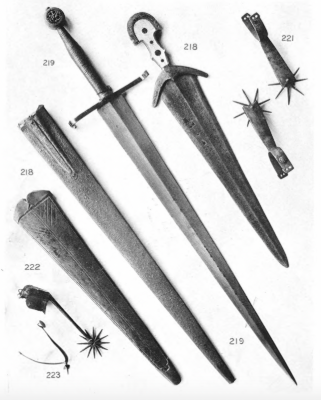
Equally remarkable is the exceptional preservation of the grip. Large portions of the original leather wrapping survive to this day, allowing the sword’s original material character to remain clearly perceptible. This authentic condition makes the object especially valuable for research, since many comparable swords were restored, re-hilted, or fitted with later components over the centuries. Contemporary catalogues therefore already emphasized that very few surviving fifteenth-century swords preserved such a complete original surface appearance.³
The sword entered the collection of the Metropolitan Museum of Art in 1926 as a gift from Henry Walters. This was indeed the same Henry Walters whose art collection later formed the foundation of the Walters Art Museum in Baltimore. Walters was among the most important American art collectors of his era and was particularly interested in medieval art, historical arms, and European decorative arts. It is therefore hardly surprising that such a high-quality North Italian sword came into his possession. At the same time, the object reflects the collecting practices of wealthy American patrons in the early twentieth century, through which many important European weapons entered major American museum collections.⁴
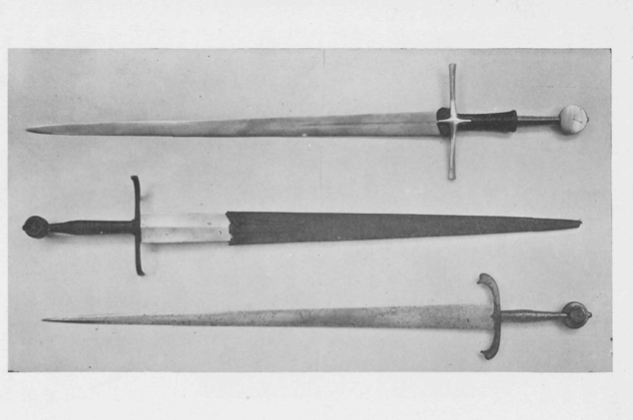
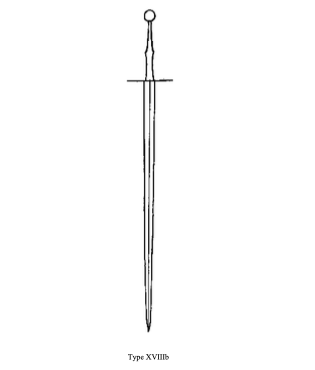
Within sword typology, the piece can convincingly be associated with Ewart Oakeshott’s Type XVIIIc. Oakeshott described this type as a characteristically Italian variation of the XVIIIb, which was otherwise more common in the German-speaking regions. Defining features include broad, comparatively heavy blades with flattened diamond cross-sections, long hand-and-a-half grips, and flat ribbon-like crossguards with slightly curved ends.⁵ These exact characteristics are also present in the Metropolitan sword. Particularly notable is the balanced proportioning that distinguishes many Italian XVIIIc swords from the often more massive German examples. Although clearly designed for combat against advanced plate armour, these weapons nevertheless possess a striking elegance of line.
Oakeshott, Ewart: The Sword in the Age of Chivalry, Woodbridge 1994, S. 70.
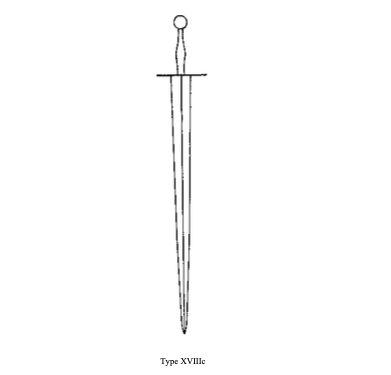
Oakeshott, Ewart: The Sword in the Age of Chivalry, Woodbridge 1994, S. 70.
Of particular significance is Oakeshott’s observation that surviving original examples of Type XVIIIc are comparatively rare.⁶ This further enhances the importance of the Metropolitan sword within scholarly research. It is also noteworthy that Oakeshott included in one of his illustration plates a Spanish XVIIIc sword from his own collection.⁷ This suggests that, despite its distinctly North Italian character, the type also spread beyond Italy and formed part of a broader late medieval exchange of European weapon forms. Interestingly, Oakeshott specifically identified this Spanish XVIIIc sword as dating from the late fifteenth century.⁸ Given the close political and economic ties between Italy and the Iberian Peninsula, such dissemination is hardly surprising and points toward the intensive circulation of martial styles and arms production traditions across late medieval Europe.
─────────────────────────
1 .Vgl.: American Art Association: European Arms and Armour, Mainly XV, XVI & XVII Centuries, New York 1926, S. 81–82.
2. Vgl.: Ebd.
3. Vgl.: Bashford, Dean / Nichol, Robert T.: Handbook of Arms and Armor: European and Oriental, 4. Aufl., New York 1930, S. 98.
4. Vgl.: Metropolitan Museum of Art: Sword with Scabbard, Object Number 26.259.2a, b, North Italian, 1450–1475, Credit Line: “Gift of Henry Walters, 1926”, Online Collection Database, New York.
5. Vgl.:Oakeshott, Ewart: The Sword in the Age of Chivalry, Woodbridge 1994, S. 76.
6. Vgl: Ebd.
7. Vgl: Oakeshott, Ewart: The Sword in the Age of Chivalry, Woodbridge 1994, Taf. 38.
8. Vgl.: Oakeshott, Ewart: The Sword in the Age of Chivalry, Woodbridge 1994, S. 76.